A half-century: long enough to be distinctive, but short enough to fit within the span of retrievable human memory. In compiling this 50th-anniversary edition, we consulted with several past leaders of our publication. Each past editor left his or her impression on our pages, and we are grateful to them for carrying Memphis Magazine forward. Like most human endeavors that endure, this one has been a relay race, with each editor carrying the baton for a few miles, a few laps around the sun, before handing it over to the person waiting around the bend. Here, then, are reflections from a few of the relay-runners from years gone by — presented with our thanks to all those involved in creating and maintaining this enterprise. — Anna Traverse
Memphis? We’re moving to Memphis?
I couldn’t believe what my husband was telling me on that snowy Chicago night in late 1989. A job that looked too good to pass up had come his way. I didn’t want to go. I said I’d stay for one year.
But once we arrived, it didn’t take long for me to change my mind.
The reason? Memphis Magazine.
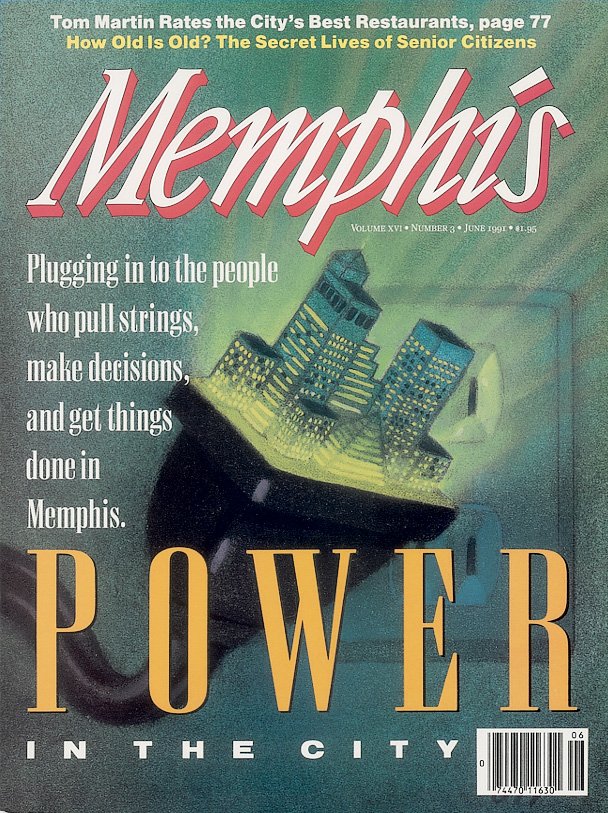
JUNE 1991
I had been a magazine editor before, in New York in the 1980s, during the last golden age of women’s consumer magazines. I’d loved every minute of it. Have you watched the movie The Devil Wears Prada? That was my New York magazine editing life, minus the clothes and trips to Paris. (I did go to L.A. often, though.)
Of course I knew that editing Memphis Magazine would be different, but I didn’t really understand how different until I got the job.
My first clue? The Commercial Appeal did a story about my hiring; apparently it was news that I was the first woman to be the magazine’s editor. Until that moment, I hadn’t known many magazine editors who weren’t female.
It didn’t take me long to realize how lucky I was to have gotten the job. The staff of the magazine then (and, probably, now) was small and quirky, as eager to help me understand my new city as they were to find a great new writer or come up with a cool cover idea.
In that pre-email/Zoom meeting age, we spent all day long hanging out together, talking about stories and art and deadlines and whatever the news of the day might be. We all read the newspaper closely and had plenty of opinions, connections, and ideas. We went out to lunch almost every day; I learned all about barbecue and pig’s ears and bottomless glasses of sweet tea. We lived and breathed MEMPHIS.
It was perhaps the best way ever to learn a new city.
Memphis Magazine was far enough off the radar that whatever we learned over lunch or on the corner or from our sources wouldn’t make it into a story for at least a couple of months (we were print-only; remember that?). Which meant that people would generally tell us all kinds of fascinating things, mostly because they knew that whatever we wrote about them would have time, context, and additional reporting added down the road. (Which, come to think of it, is what makes good magazine writing so compelling.)
I learned back in my Memphis Magazine editor days that a city magazine is an essential voice in the journalism mix. At its best, it reflects the unique ways a place talks about itself and how we see each other. Long may it publish.
We also didn’t wield the kind of make-or-break power that The Commercial Appeal did at that time. Which is why I was invited to climb to the top of the still-open-to-the-sky Pyramid with then-Mayor Dick Hackett and his chief aide, Ray Pohlman, asking whatever questions I wanted. It’s also why I learned the words to the Black National Anthem so I wouldn’t stand out quite so much in crowds around Willie Herenton, the first Black elected mayor of Memphis. It’s why I could get almost anyone I wanted to interview on the phone, eventually.
Sure, there were the boring “10 Best” lists (breakfasts, margaritas, you name it) — food stories and home décor and automotive features that were how most city magazines paid the bills, restaurants and car dealerships being particularly good advertisers. But even that, for someone new to town, meant the chance to find something amazing and unique to Memphis.
I’ll still never forget my first visit to the Waffle Shop at Calvary Episcopal Church, a temporary restaurant that sets up in the church basement during Lent. Former Mayor Wyeth Chandler was holding forth in one corner, a table of federal judges was talking about the latest news across the room, and faces I saw every day in the paper were chowing down on chicken salad and tomato aspic. It was incredible.
While my first love is news — I eventually ended up as a senior editor at The Commercial Appeal — I learned back in my Memphis Magazine editor days that a city magazine is an essential voice in the journalism mix. At its best, it reflects the unique ways a place talks about itself and how we see each other. Long may it publish.
Leanne Kleinmann served as director of advancement at St. Mary’s Episcopal School and is the founder of Leanne Kleinmann Communications.